

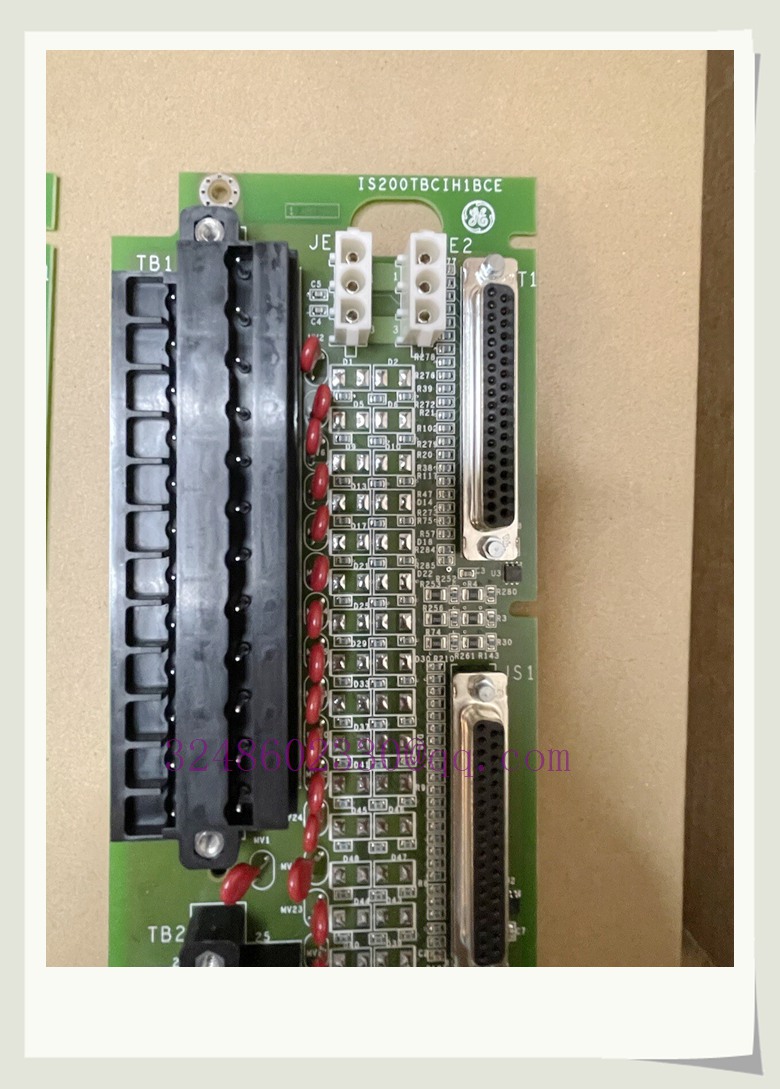
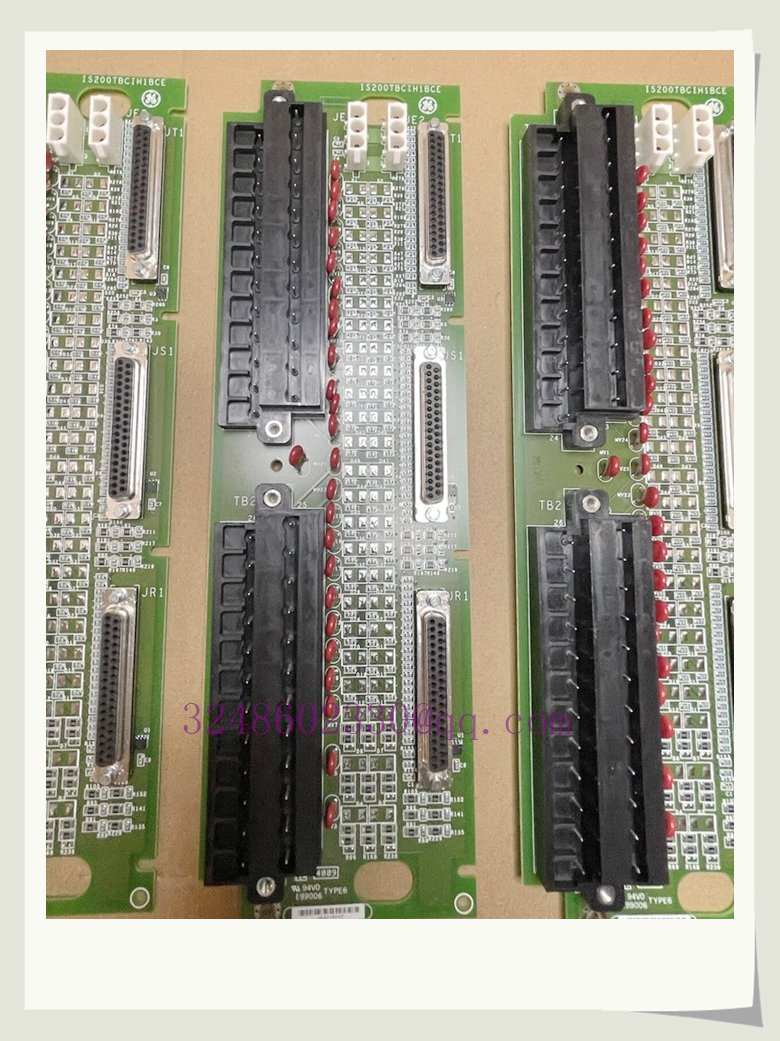
- Brand: GE (General Electric)
- Model: IS200TBCIH1B
- Product Title: GE Mark VI Contact Input Terminal Board
- Product Name: 24-Channel Dry Contact Input Terminal Board for Gas/Steam Turbine Control Systems
Product Description
The GE IS200TBCIH1B is a specialized Contact Input Terminal Board (TBCI) designed for the GE Speedtronic Mark VI turbine control system. It serves as a critical field interface module, providing 24 channels of dry contact (switch) input for monitoring the status of valves, limit switches, trip circuits, and other discrete devices in gas and steam turbine applications.
This board is a passive terminal interface, meaning it does not perform any signal conditioning or analog-to-digital conversion. Its primary function is to safely route and filter field signals from the turbine’s discrete sensors and send them to the associated VIOC (Voltage Input/Output Controller) processor boards via high-density connectors. It is engineered to support single, dual, or Triple Modular Redundant (TMR) architectures, ensuring high availability and safety in critical power generation environments.
Technical Specifications
- Product Type: Contact Input Terminal Board
- Control System Series: GE Speedtronic Mark VI
- Input Channels: 24 Channels of Dry Contact (Switch) Input
- Signal Type: Discrete, Non-powered (Dry) Contacts
- Terminal Blocks: Two (2) 24-position pluggable barrier terminal blocks (TB1 & TB2)
- Processor Interface: Three (3) high-density connectors (JS1, JT1, JR1) for connection to VIOC processor boards
- Redundancy Support: Single, Dual, and Triple Modular Redundant (TMR) configurations
- Protection: On-board Metal Oxide Varistors (MOVs) for surge suppression and hardware filtering for noise immunity
- Operating Temperature: -30°C to +65°C (-22°F to +150°F)
- Dimensions: Approximately 33 cm x 10.2 cm x 4.8 cm (13 in x 4 in x 1.9 in)
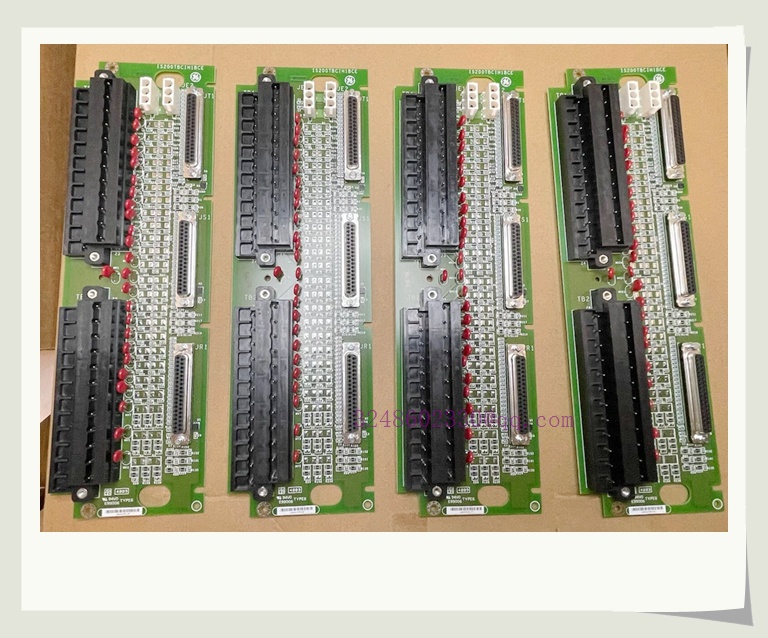
IS200TBCIH1B
Key Features and Benefits
- TMR Architecture Support: Enables Triple Modular Redundancy for mission-critical applications, allowing the system to tolerate a single-point failure without tripping the turbine, thereby maximizing plant availability.
- Robust Signal Conditioning: Integrated MOVs and filtering circuits protect the sensitive VIOC processor boards from voltage spikes and electrical noise common in harsh power plant environments.
- Pluggable Terminal Blocks: The two 24-position terminal blocks are pluggable, allowing for faster and safer field wiring changes or board replacement without disconnecting individual wires.
- Passive & Reliable Design: As a passive interface board with no active logic, it offers high reliability and a long Mean Time Between Failures (MTBF), simplifying troubleshooting and maintenance.
- Clear Channel Identification: Terminal blocks are clearly labeled 1-48, corresponding to the 24 input channels, facilitating accurate wiring and maintenance.
Application Areas
- Gas Turbine Control Systems: Monitoring valve positions, lube oil pressure switches, and flame detector status.
- Steam Turbine Control Systems: Interfacing with trip solenoids, governor feedback, and bearing temperature switches.
- Combined Cycle Power Plants: Integrating discrete status signals from Balance of Plant (BOP) equipment into the main turbine control system.
- Industrial Cogeneration Facilities: Providing reliable discrete I/O for turbine protection and sequencing logic.
Brand-Related Product Recommendations
- IS200TBCIH2B: The newer H2 version of the terminal board. Note: This is not a direct drop-in replacement for the H1B version due to different channel counts and connector pinouts.
- IS200VIOCH1B (VIOC Board): The essential companion processor board that performs the actual signal reading and logic processing for the IS200TBCIH1B.
- IS200TCQCH1B: A related terminal board for analog inputs, often found in the same Mark VI I/O rack.
- Mark VI Turbine Control Cabinet: The complete system enclosure that houses the VIOC processors, TBCI terminal boards, and power supplies.
Installation and Maintenance
Installation:
- Safety First: Ensure the turbine control system is properly shut down and locked out (LOTO) before beginning any work.
- Mounting: Slide the IS200TBCIH1B board into an available slot in the Mark VI I/O rack and secure it with the retaining screws.
- Processor Connection: Connect the three ribbon cables (JS1, JT1, JR1) from the terminal board to the corresponding connectors on the VIOC processor board(s). Ensure the connectors are fully seated and locked.
- Field Wiring: Connect the field wiring for the dry contact inputs to the TB1 and TB2 terminal blocks. Verify wire gauge and torque specifications according to GE documentation.
- Verification: After powering up the system, perform a point-to-point verification test by simulating contact closures at the field device and confirming the correct status change in the control system software.
Maintenance:
- Visual Inspection: During scheduled outages, inspect the terminal blocks for signs of overheating, corrosion, or loose connections. Check the board for any physical damage or burnt components.
- Tightness Check: Periodically verify the torque on terminal block screws to ensure reliable electrical connections, as vibration can cause them to loosen over time.
- Diagnostics: Utilize the Mark VI system’s built-in diagnostics to monitor for channel faults, such as open or shorted inputs, which can indicate a failing field device or wiring issue.
- Replacement: If the board is suspected to be faulty, replace it with a genuine GE spare. Always verify the hardware revision (e.g., BBC, BCE, BCD) matches the system configuration before installation.