

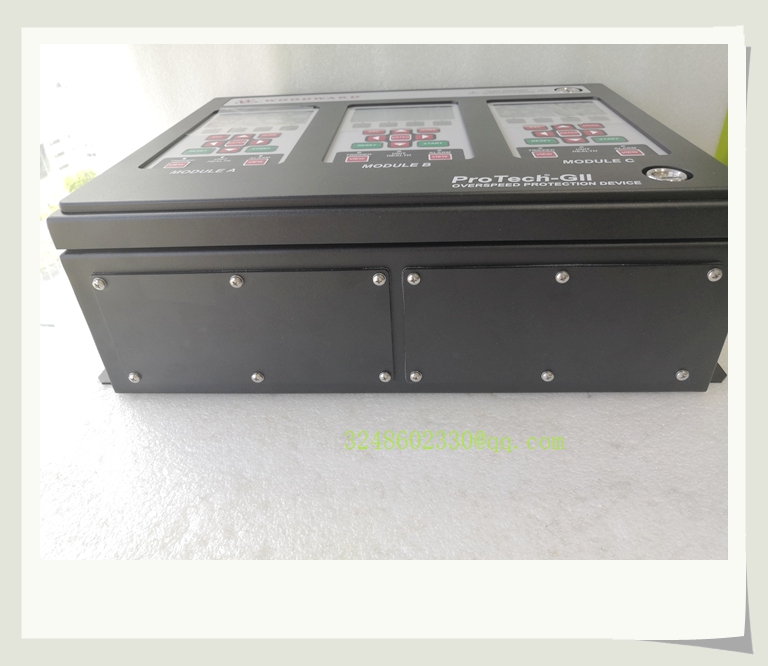
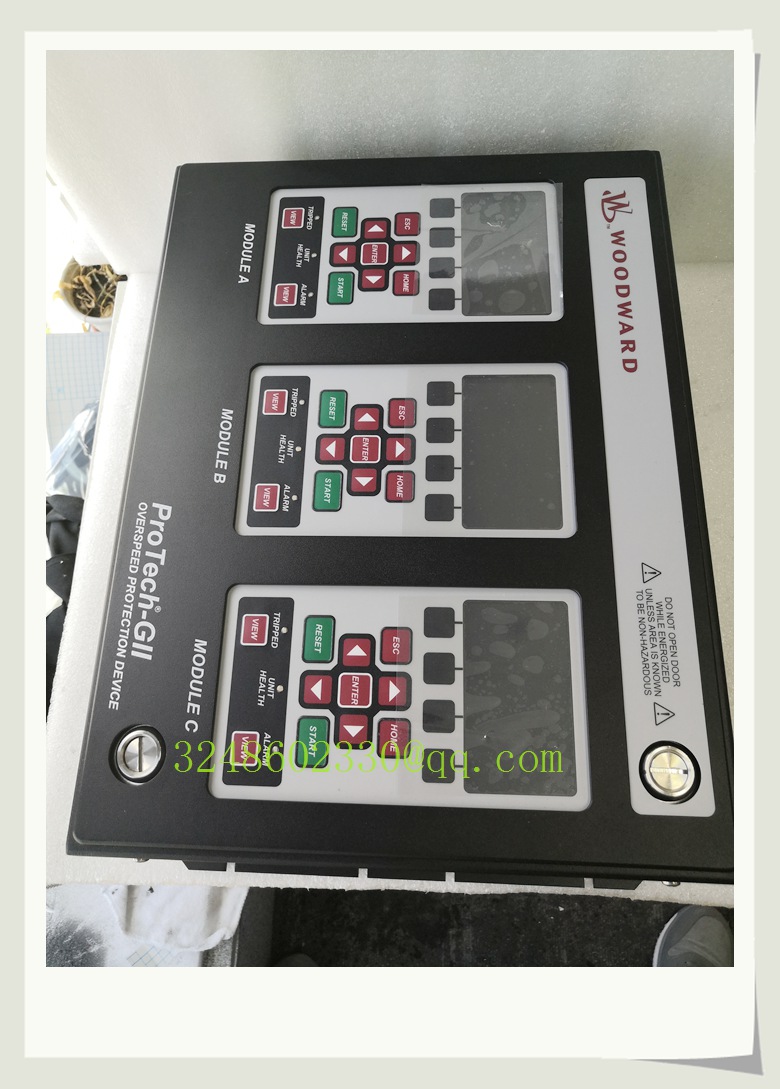
WOODWARD 8237-1246 – Servo Current Driver Module
1. Product Brand, Model & Title
| Field | Information |
|---|---|
| Brand | Woodward (Woodward, Inc.) |
| Model | 8237-1246 |
| Product Title | Servo Current Driver / Amplifier Module |
| System Compatibility | NetCon® Control Systems, Turbine Control Cabinets |
2. Executive Brief
The Woodward 8237-1246 is a high-reliability servo current driver module designed to interface digital control systems with electro-hydraulic servo valves. Acting as a power amplifier, it converts low-level analog voltage or current command signals from a main turbine controller (such as the Woodward NetCon 5000 or MicroNet) into the high-current drive required to position hydraulic actuators. This module is critical in steam and gas turbine applications, providing precise regulation of fuel flow, steam admission, or variable inlet guide vanes (IGV). The 8237-1246 is engineered to withstand harsh industrial environments, offering features such as current limiting, short-circuit protection, and redundancy to ensure safe and continuous turbine operation.
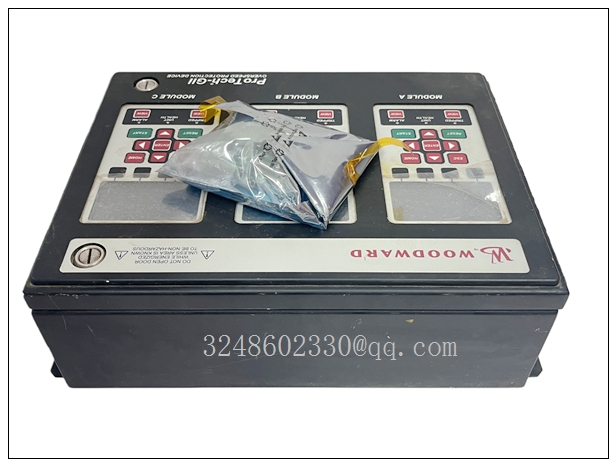
WOODWARD 8237-1246
3. Core Technical Specifications
| Parameter Category | Specification | Details |
|---|---|---|
| Function | Type | Servo Valve Current Driver / Amplifier |
| Output | Output Current | Typically ranges up to ±200 mA or ±500 mA (continuous), depending on valve impedance (check datasheet for specific 1246 variant). |
| Output Voltage | Compliance voltage typically suited for solenoid valves (e.g., ±24 VDC or higher). | |
| Input | Command Signal | Analog Differential Input (e.g., ±10 VDC). |
| Feedback | Current feedback loop for precise regulation. | |
| Power | Supply Voltage | Typically 24 VDC or 125 VDC (System bus power). |
| Diagnostics | Monitoring | Built-in detection for Open Circuit, Short Circuit, and Over-current faults. |
| Redundancy | Architecture | Often used in redundant pairs (Voting 2-out-of-3 or 1-out-of-2) for safety-critical applications. |
| Environmental | Operating Temp. | -40°C to +70°C (Standard industrial qualification). |
| Vibration | Tested to IEC 60068-2-6 for turbine cabinet environments. | |
| Mounting | Form Factor | Plug-in PCB module (typically rack-mounted in a dedicated I/O chassis or backplane). |
4. Key Features and Advantages
- Precision Actuation: Delivers highly accurate current output to ensure linear positioning of servo valves, which is vital for precise speed and load control of turbines.
- Advanced Fault Protection: Integrated diagnostics continuously monitor the health of the output loop. If a wire breaks or the valve coil shorts, the module immediately flags a fault and can shut down safely to prevent valve instability.
- Redundant Capability: Designed to operate in dual-redundant configurations (Active/Standby or Active/Active with voting), ensuring that a single module failure does not cause a turbine trip.
- Low Noise & Drift: High-quality signal conditioning minimizes electrical noise and thermal drift, ensuring stable operation even in electrically noisy switchgear rooms.
- Rugged Design: Built with conformal coating and robust components to resist humidity, dust, and vibration associated with power generation packages.
5. Application Scenarios
The Woodward 8237-1246 is exclusively utilized in heavy-duty rotating machinery control:
- Steam Turbine Control: Driving governor valves (control valves), stop valves, and reheat intercept valves in power plants.
- Gas Turbine Control: Modulating fuel valves (stroke valves) and Variable Inlet Guide Vanes (IGV) for performance optimization.
- Hydro Turbine Governors: Controlling wicket gate servos in hydroelectric plants.
- Generator Excitation: In some configurations, driving excitation field flashing or auxiliary control actuators.
- Reciprocating Engines: Controlling fuel racks and throttle actuators in large gas engines.
6. Brand Related Models
| Model Number | Relation to 8237-1246 |
|---|---|
| 8237-1245 | Similar Servo Current Driver; often varies in output current range or impedance matching. |
| 8237-1242 | Older or alternative variant within the same servo driver family, potentially with different connector types. |
| 8237-1251 | A high-power variant for heavy-duty servo valves requiring higher current output. |
| 8237-1156 | Related servo driver module for specific actuator types. |
| Woodward 9907 Series | Analog or microprocessor controls that might utilize external drivers like the 8237 series (though modern units have integrated drivers). |
| Woodward 5466 | Valve positioners and LVDT sensors that often work in conjunction with the 8237 driver in a closed loop. |
7. Frequently Asked Questions (FAQ)
Q1: How do I know if my servo valve is compatible with the 8237-1246?
A: Check the servo valve’s coil resistance and current rating. The 8237-1246 is designed for specific standard ranges (e.g., 80-200 ohm coils). Ensure the valve’s required current does not exceed the module’s maximum output rating (e.g., ±200mA continuous) to avoid overheating.
Q2: Can I perform a “bump test” with this module?
A: Yes, typically through the host control software (e.g., Woodward Graphical Programming Tool). You can inject a small offset to verify valve movement without tripping the unit. The 8237 module will faithfully reproduce the analog command.
Q3: What does “Open Circuit” fault mean on this driver?
A: An Open Circuit fault indicates that the resistance in the loop is too high (infinite). This usually means the wiring to the servo valve is cut, or the coil inside the valve has burned out (open). The driver detects this because it cannot establish the expected current flow.
Q4: Is this module hot-swappable?
A: In many Woodward NetCon cabinets, the modules are designed to be removed and inserted while power is applied (Hot Swappable). However, you must check the specific cabinet design (e.g., 9907-xxxx series cabinets) and ensure the host system supports redundancy or safe manual bypass before removal.
Q5: What is the difference between 8237-1246 and 1245?
A: While both are servo drivers, differences typically lie in the internal calibration, impedance matching, or minor connector pinout variations. Always replace with the exact part number unless an engineering review confirms compatibility for the specific valve application.