

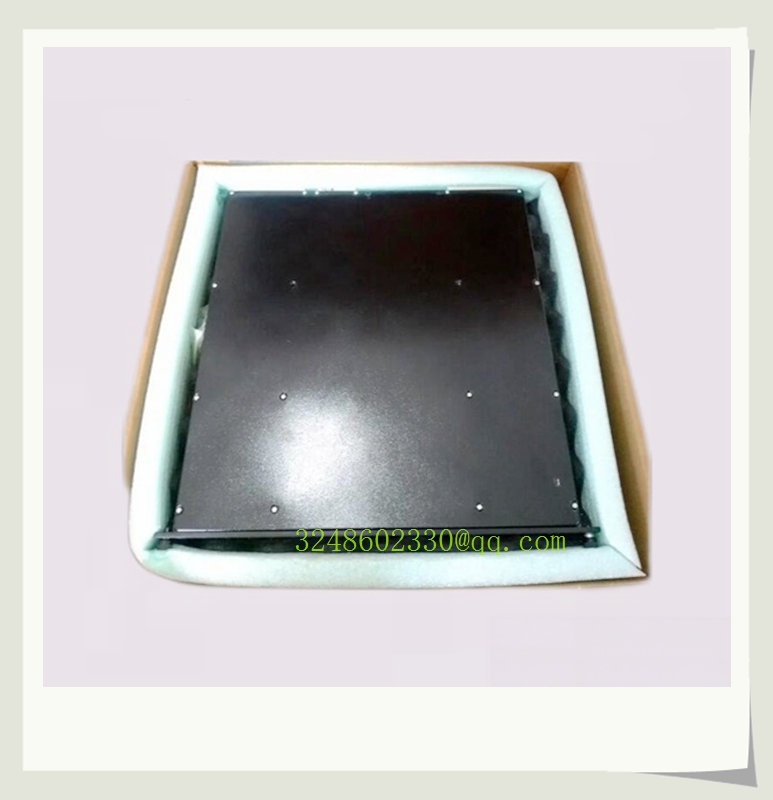
Triconex 3603E – TMR Digital Output Module
1. Product Brand, Model & Title
| Field | Information |
|---|---|
| Brand | Triconex (a Schneider Electric brand) se.com |
| Model | 3603E |
| Product Title | Triconex TMR Digital Output Module |
| Platform | Triconex Tricon™ Safety System |
2. Executive Brief
The Triconex 3603E is a Triple Modular Redundant (TMR) Digital Output Module engineered for critical industrial control and safety applications within the Triconex safety system platform. It serves as a high-integrity interface between the Tricon controllers and field devices, providing unparalleled reliability and precision through advanced fault tolerance and continuous diagnostics zcgplc.com+1. This module is specifically designed to meet the rigorous requirements of Safety Integrity Level (SIL) 3 applications, ensuring maximum safety and availability in demanding process environments such as oil & gas, chemical processing, and power generation.
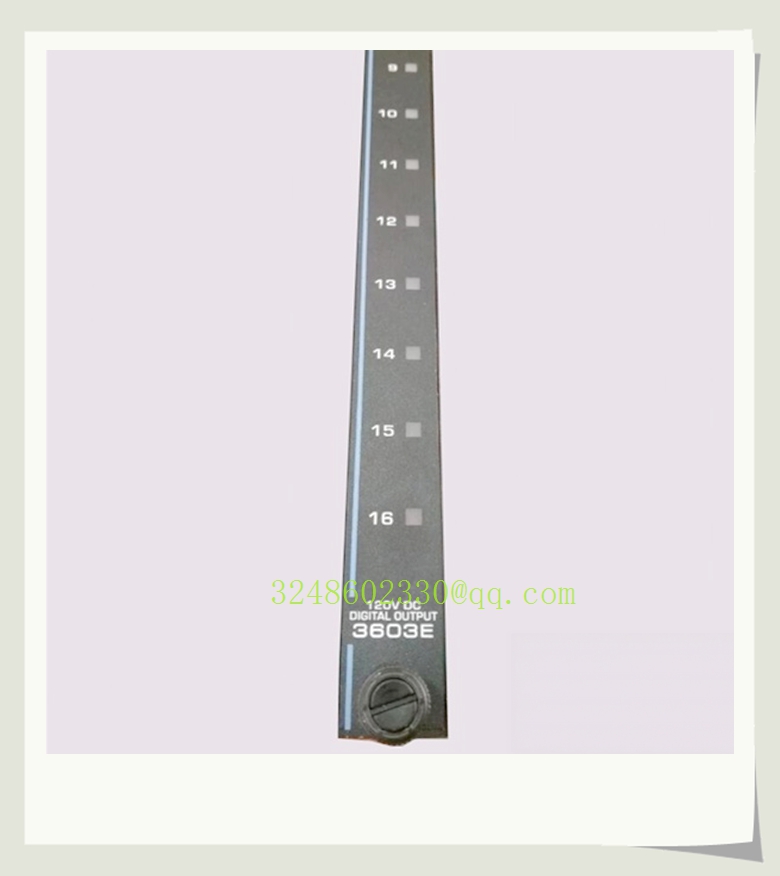
TRICONEX 3603E
3. Core Technical Specifications
| Parameter Category | Specification | Details |
|---|---|---|
| Architecture | Redundancy Type | Triple Modular Redundant (TMR) with Quadruplicated Voter Circuitry plcdcspro.com |
| Channels | Number of Points | Typically 16 digital output points (commoned, e.g., 3603E/T) dcsmodule.com |
| Output Type | Signal Type | Digital (On/Off) sourcing outputs |
| Voting Logic | Output Voting | 2-out-of-3 voting logic on each output point for fault tolerance |
| Diagnostics | Continuous Monitoring | Comprehensive ongoing diagnostics for each channel and output circuit plcdcspro.com |
| Fault Detection | Latent Fault Detection | Voltage loopback circuit verifies operation of each output switch and detects field voltage discrepancies plcdcspro.com |
| Power | Field Power | Requires external field power to be wired to each output point on the field termination module toptengplc.com |
| Environmental | Operating Temp. | Designed for industrial environments (specific range per system manual) |
| Compliance | Safety Standards | Designed for use in SIL 3 safety applications |
4. Key Features and Advantages
- Triple Modular Redundancy (TMR): The core advantage is its TMR architecture. The module contains three isolated channels that process the same output signals in parallel. The outputs are then voted upon (2-out-of-3 logic) to produce a single, reliable signal for the field. This ensures that a single component failure within the module will not cause an erroneous output, thereby maintaining both safety and system availability plcdcspro.com.
- Quadruplicated Voter Circuitry: Beyond the three main channels, the 3603E employs quadruplicated voter circuitry to provide an additional layer of redundancy for critical signal paths. This design maximizes safety by further reducing the probability of a dangerous failure on the output plcdcspro.com.
- Advanced Diagnostics & Fault Detection: The module performs ongoing diagnostics on each channel, including its own health and the integrity of the field wiring. A key feature is its voltage loopback circuit, which actively verifies the operation of each output switch and detects latent faults. If a discrepancy is detected between the expected and actual field voltage, an alert is triggered, allowing for proactive maintenance plcdcspro.com.
- High Availability & Fault Tolerance: The combination of TMR, voting logic, and comprehensive diagnostics means the system can continue to operate safely and correctly even in the presence of internal hardware failures. The module is designed to fail safely, with a predetermined state (e.g., de-energize) upon detection of a critical fault.
- Precision & Reliability: Engineered for critical applications, the 3603E ensures precise and consistent output signals. Its design minimizes the risk of spurious trips (nuisance shutdowns) while guaranteeing that the safety function performs correctly when demanded.
5. Application Scenarios
The Triconex 3603E is deployed in the most critical sections of industrial plants where safety is paramount:
- Emergency Shutdown (ESD) Systems: Providing final element control for shutdown valves (SDVs) and blowdown valves in oil & gas platforms and refineries.
- Process Safety Systems: Implementing critical interlocks and safety permissives in chemical reactors and distillation columns.
- Fire & Gas (F&G) Systems: Triggering suppression systems (deluge, foam, CO₂) and activating audible/visual alarms upon fire or gas detection.
- Turbine & Compressor Control: Governing critical outputs for overspeed protection, emergency trip logic, and auxiliary systems control in power generation and rotating machinery.
- Nuclear Safety Instrumentation: In qualified applications, providing safety-rated actuation and control within nuclear power plants.
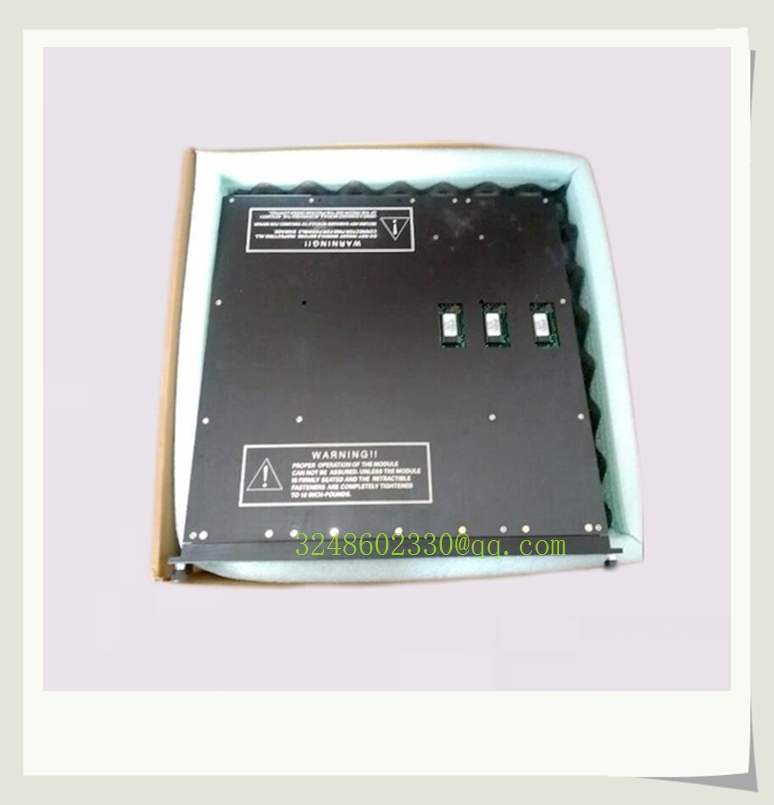
TRICONEX 3603E
6. Brand Related Models
| Model Number | Relation to 3603E |
|---|---|
| 3603E/T | A variant of the 3603E with specific termination or cabling differences (e.g., commoned outputs). |
| 3601E | Digital Input Module (part of the same Triconex family, typically used in conjunction with 3603E). |
| 3604E | Analog Input Module (complements the 3603E for analog monitoring and control). |
| 3700A / 3701A | Main Processor Modules that execute the control logic and send output commands to the 3603E. |
| 3800E | Communication Module for interfacing the Tricon system with external networks. |
| Tricon v9/v10 | The Triconex controller chassis and backplane that host the 3603E module and other system components. |
7. Frequently Asked Questions (FAQ)
Q1: What is the primary difference between a standard digital output module and the Triconex 3603E?
A: The fundamental difference is the Triple Modular Redundancy (TMR) and quadruplicated voter circuitry. Standard modules typically have a single signal path, whereas the 3603E has three independent processing channels that vote on the output. This provides a much higher level of fault tolerance and safety integrity, qualifying it for use in SIL 3 applications where a single point of failure could have catastrophic consequences.
Q2: How does the voltage loopback circuit work?
A: The loopback circuit is a diagnostic feature that allows the module to continuously verify the integrity of its output switches and the field wiring. It essentially reads back the voltage on the output line after it has been driven. The module compares this measured voltage with what it expects to see based on its commanded output state (ON or OFF). If a significant discrepancy is detected (e.g., the output should be ON but the voltage is not present, or vice versa), the module identifies a fault (such as a short circuit, open circuit, or a failed output switch) and triggers an alarm.
Q3: Can the 3603E module be replaced while the system is online (hot-swappable)?
A: Triconex systems are designed for high availability. Yes, the 3603E module is typically hot-swappable. It can be removed and replaced without shutting down the entire process or safety system. The system is designed to continue operating safely on the remaining redundant channels during the replacement process. However, always follow the specific hot-swap procedures outlined in the Triconex manual and ensure proper authorization before performing any maintenance online.
Q4: What happens if one of the three channels in the 3603E fails?
A: If a single channel fails, the 2-out-of-3 voting logic ensures that the other two healthy channels maintain the correct output state. The system will not cause an incorrect output due to this single fault. The module’s diagnostics will detect the fault, and it will be reported to the system operators via an alarm or system message. The system can often continue to operate safely with a degraded (dual-redundant) state until maintenance can be scheduled. This exemplifies the “fault-tolerant” nature of the Tricon system.
Q5: What is the purpose of quadruplicated voter circuitry?
A: The quadruplicated voter circuitry is an additional layer of redundancy beyond the three main processing channels. It is used to further reduce the probability of a dangerous failure on the output. By having four separate voting elements, the system can tolerate a failure in one of the voters themselves without compromising the integrity of the final output signal. This is part of the “safety-compensated” design that allows the module to achieve the highest safety integrity levels.