

- Brand: Emerson (EPRO / CSI)
- Model: A6500-RC
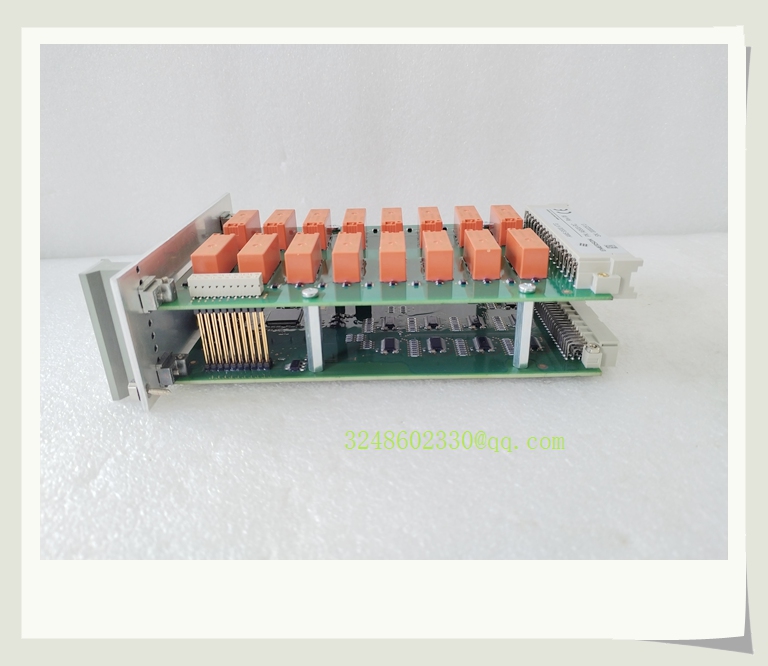
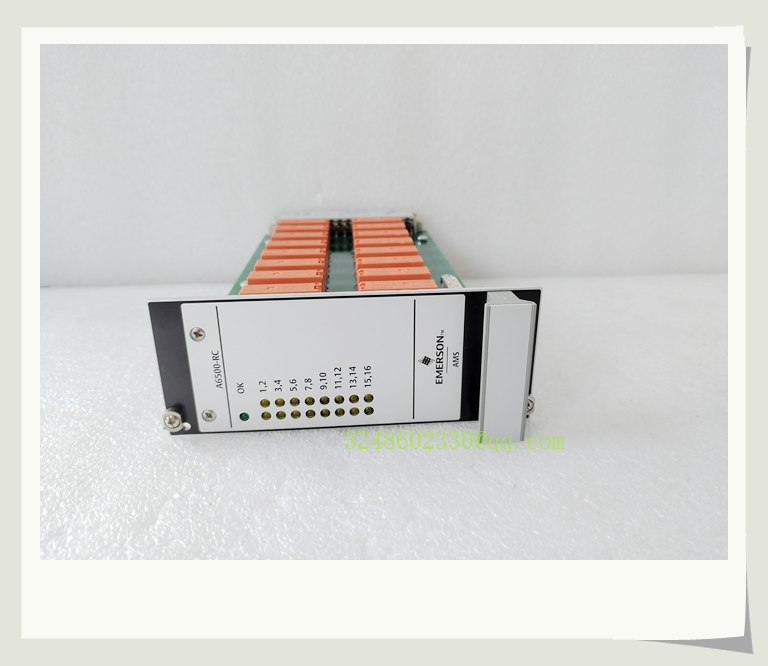
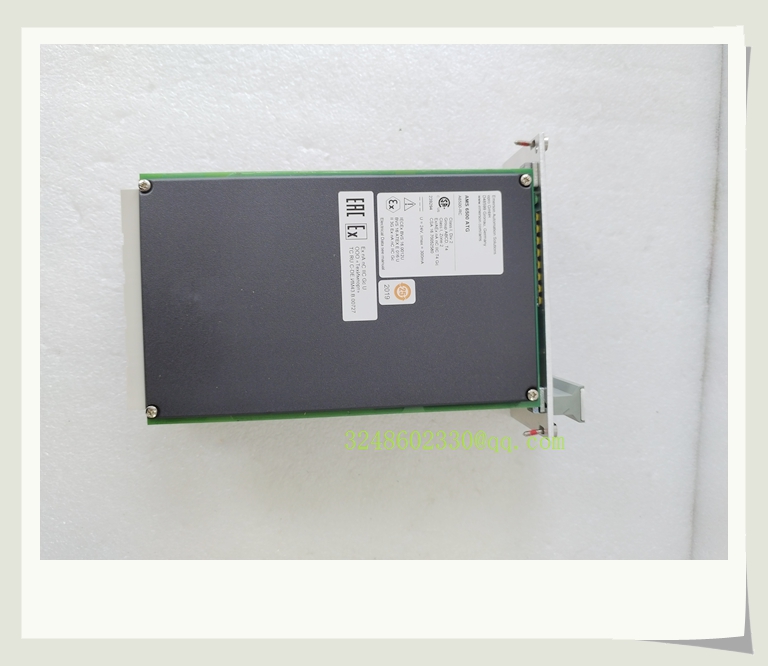
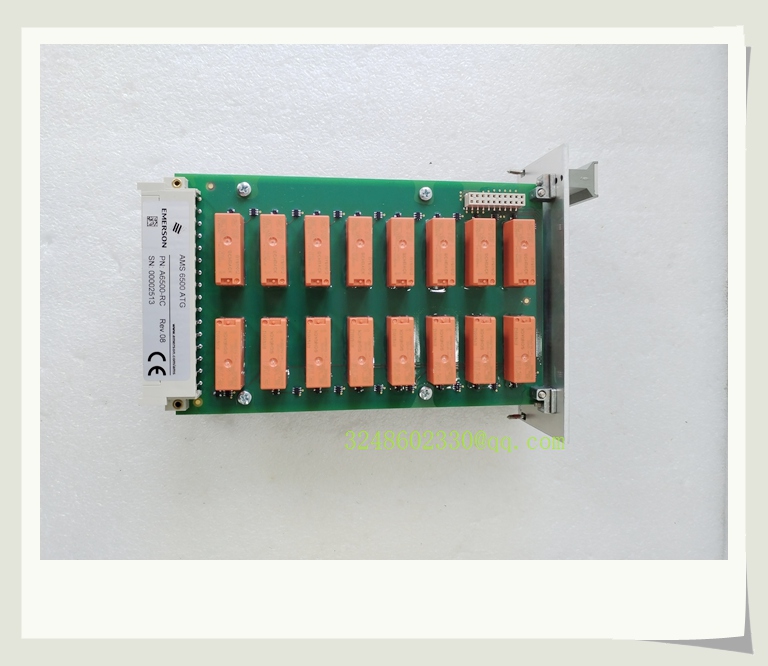
- Product Title: Emerson AMS 6500 ATG 16-Channel Relay Output Module
- Product Name: API 670 Machinery Protection Relay Module for Critical Rotating Equipment
A6500-RC
Product Description
The Emerson A6500-RC is a 16-channel output relay module designed for high-reliability machinery protection applications. It is a key component of the AMS 6500 ATG (Advanced Turbomachinery Guard) system, working in conjunction with measurement modules (such as the A6500-UM) to form a complete API 670-compliant machinery protection monitor.
The module accepts any channel’s OK, Alert, or Alarm signal as input, and through configurable Boolean logic, time delays, and relay assignment, provides hardwired trip protection for critical rotating machinery. Its user-friendly configuration software offers graphical logic displays that visually guide users through the setup process, significantly simplifying commissioning and maintenance.
Technical Specifications
- Product Series: AMS 6500 ATG Machinery Protection System
- Form Factor: Single-Slot Plugin Module (A6500-SR Rack)
- Relay Outputs: 16 channels, SPDT (Single Pole Double Throw)
- Digital Inputs: 66 channels
- Logic Low (inactive): 0V to 3V
- Logic High (active): 13V to 32V
- Open circuit: Detected as inactive
- Rated current: 1 mA / Rated power: 24 mW
- Relay Output Ratings:
- Maximum voltage: 32V DC / 48V AC
- AC1 load: 48V / 2A
- DC1 load: 32V / 2A
- DC-13 load: 24V / 1A
- AC-15 load: 24V / 2A
- Rated current: 2A / Rated power: 96W
- Response Time:
- NO contact: 10 ms
- NC contact: 13 ms
- Logic processing time: None
- Power Supply: 24 VDC nominal (typical 18–36 VDC), ≤ 15W
- Operating Temperature: 0°C to +60°C
- Humidity: 5–95% RH non-condensing
- Communication: Ethernet 10/100BASE-TX (RJ45), Modbus TCP for status/alarms
- Compliance: API 670, CE marking, RoHS
Key Features and Benefits
- 16-Channel High-Density Output: Provides 16 independent SPDT relay outputs in a single module slot, maximizing rack space utilization while covering multiple protection points.
- Flexible Boolean Logic Configuration: Any channel’s OK/Alert/Alarm signal can be selected as relay input. Users can apply Boolean logic operations and time delays to create customized protection schemes without external logic controllers.
- Graphical Configuration Software: The user-friendly software provides visual logic diagrams that guide users step-by-step through configuration, reducing commissioning time and minimizing configuration errors.
- Hardwired Trip Protection: Delivers direct hardwired relay outputs for emergency shutdown, ensuring fail-safe protection independent of higher-level control systems.
- Comprehensive Self-Diagnostics: Continuously monitors module health, power supply, and relay status, providing real-time fault indication and alarm lockout to prevent false trips.
- API 670 Compliance: Designed to meet the stringent requirements of the API 670 standard for machinery protection systems.
Application Areas
- Power Generation: Steam turbines, gas turbines, hydro turbines, and generators.
- Oil & Gas: Compressor trains, centrifugal and reciprocating pumps, expanders.
- Petrochemical & Refining: Critical process compressors, blowers, and high-speed fans.
- LNG & Pipelines: Booster compressors and pipeline pumping stations.
- Industrial Manufacturing: Large gearboxes, critical motors, and turbo-expanders.
Brand-Related Product Recommendations
- A6500-UM: Universal Measurement Card — the primary vibration and position monitoring module whose alarm signals feed into the A6500-RC.
- A6500-CC: Communication Card — provides Modbus TCP/IP, Modbus RTU, and OPC UA connectivity for the AMS 6500 rack.
- A6500-SR: System Rack — provides power supply and backplane connectivity for all A6500 modules.
- A6500-LC: LVDT Signal Conditioner Card — for LVDT sensor inputs used in position monitoring.
- AMS Machine Works / System 1 Software: Advanced condition monitoring software for predictive diagnostics and performance trending.
Installation and Maintenance
Installation:
- Rack Preparation: Ensure the A6500-SR system rack is properly installed, grounded, and powered.
- Module Insertion: Align the A6500-RC module with the designated slot and slide it in until fully seated on the backplane.
- Wiring: Connect the relay output wiring to the front-panel terminal block. Follow proper wiring practices for the intended load (AC or DC) and ensure correct polarity.
- Configuration: Connect a laptop to the system via Ethernet and use the graphical configuration software to assign relay logic, set time delays, and map channel alarm signals to specific relay outputs.
- Verification: Perform a functional test by simulating alarm conditions on the measurement modules and verifying that the correct relays actuate within the specified response time.
Maintenance:
- Visual Inspection: Periodically check the module and terminal connections for signs of overheating, corrosion, or loose wiring.
- Relay Function Test: During scheduled outages, perform a controlled relay actuation test to verify that all 16 channels respond correctly to their configured logic inputs.
- Diagnostics Monitoring: Monitor the module’s status via Modbus TCP or the local display to detect any hardware faults or communication errors.
- Firmware Updates: Check for firmware updates from Emerson to ensure the module has the latest features and bug fixes.
- Preventive Replacement: For mission-critical applications, consider keeping a spare A6500-RC module on-site to minimize downtime in case of a failure.